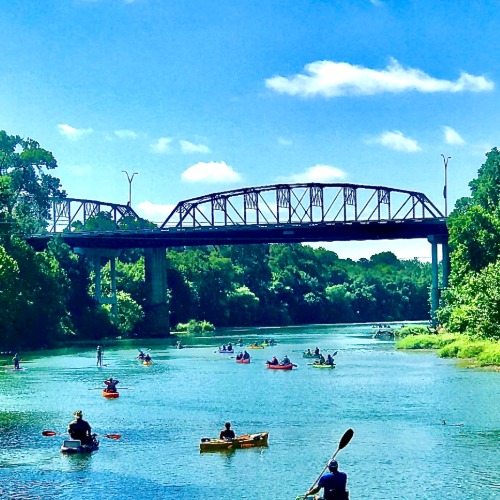

The Rich History of Bastrop County: From the Tonkawa to Today
Bastrop County Calendar
Bastrop County Calendar Team
Bastrop County's story stretches back thousands of years — a tapestry woven from Native American traditions, Spanish exploration, the fight for Texas independence, the trials of the Civil War, and the resilient spirit of a community that has rebuilt itself time and again. Understanding this history deepens our appreciation for the place we call home.
Before European Contact
Long before the first European set foot in what we now call Bastrop County, the Tonkawa people called this land home. They were semi-nomadic hunters and gatherers who lived along the Colorado River, utilizing the rich resources of the "Lost Pines" region — that remarkable island of loblolly pines that exists 100 miles west of the East Texas pine belt. The Tonkawa's deep knowledge of the land, water, and wildlife sustained their communities for centuries.
Archaeological evidence suggests human habitation in the area dating back over 9,000 years, with artifacts found along the Colorado River corridor that paint a picture of continuous settlement and cultural development.
The Spanish Colonial Period
The area's recorded history begins with Spanish explorers who traveled the El Camino Real de los Tejas — the Royal Road — which passed directly through what is now Bastrop. This historic trail connected Spanish missions in East Texas to settlements in Mexico, and the Colorado River crossing at Bastrop was a critical waypoint.
The town's namesake, the Baron de Bastrop (Felipe Enrique Neri), was a fascinating figure — a Dutchman who reinvented himself as a Spanish nobleman and became the land commissioner who helped Stephen F. Austin secure his famous land grant. His influence on early Texas colonization was profound, even if his aristocratic claims were largely fabricated.
Republic and Statehood
Bastrop County was established in 1836, making it one of the original 23 counties of the Republic of Texas. The town of Bastrop was officially incorporated in 1837 and quickly became an important settlement thanks to its position on the Colorado River and the El Camino Real.
The area attracted settlers from across the American South, as well as significant German and Swedish immigrant communities. These diverse settlers brought their own traditions, architectural styles, and agricultural practices, creating the cultural tapestry that still defines Bastrop County today.
The Civil War and Reconstruction
Bastrop County's involvement in the Civil War was complex. The county sent soldiers to fight for the Confederacy, and the local economy — heavily dependent on cotton and agriculture — suffered during and after the conflict. The post-war Reconstruction period brought significant social upheaval, but also saw the establishment of Black communities, churches, and schools that would become pillars of county life.
The Iron Horse and Economic Growth
The arrival of the railroad in the 1870s and 1880s transformed Bastrop County. Towns like Smithville and Elgin grew rapidly as rail depots, and the county's agricultural products — cotton, cattle, and lumber — gained access to markets across Texas and beyond. Smithville became a major railroad town, and its heritage is still celebrated today.
The early 20th century saw the development of the Bastrop State Park, built by the Civilian Conservation Corps (CCC) during the 1930s. The park's rustic cabins, stone structures, and scenic roads remain some of the finest examples of CCC craftsmanship in Texas.
The Lost Pines Wildfire of 2011
No account of Bastrop County's modern history is complete without acknowledging the devastating wildfire of September 2011. The most destructive wildfire in Texas history burned over 34,000 acres, destroyed 1,600+ homes, and consumed much of the beloved Lost Pines forest. The fire tested the community like nothing before.
But what followed demonstrated the true character of Bastrop County. The community came together with extraordinary resilience. Neighbors helped neighbors rebuild. Volunteers replanted thousands of trees. And today, the Lost Pines are regenerating — young pines rising from the ashes, a living symbol of Bastrop's indomitable spirit.
Bastrop County Today
Modern Bastrop County is experiencing a renaissance. New residents drawn by the county's beauty, affordability, and proximity to Austin are joining longtime families, creating a dynamic community that honors its heritage while embracing the future. Historic Main Street is thriving with locally owned businesses, the arts scene is flourishing, and the natural landscape continues to heal and inspire.
From the Tonkawa to today, Bastrop County's story is one of adaptation, resilience, and community. Every festival, every market, every gathering on the courthouse lawn is a continuation of a tradition that stretches back thousands of years — people coming together in this special place along the Colorado River.
🏛️ Explore Bastrop's Heritage
Visit the Bastrop County Historical Society Museum to see artifacts, photographs, and stories from every era of county history.
Check the Bastrop County Calendar for historical tours, heritage festivals, and museum events.